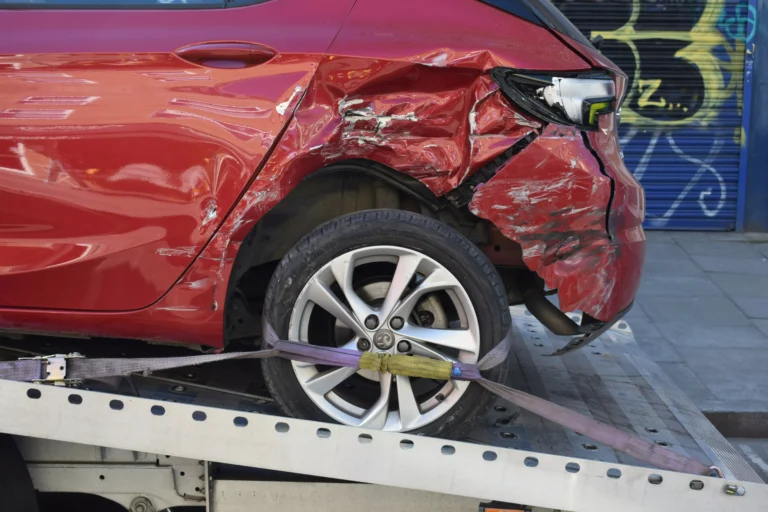
Diminution in value compensation is the claim made to cover the decrease in a vehicle’s second-hand market value after it has been repaired following a traffic accident. Even if the vehicle is fully and properly repaired, its market value decreases due to its accident history, and this loss can be legally compensated.
For vehicles that have been involved in an accident or had parts replaced, the vehicle diminution in value can be calculated based on specific parameters. This allows both sellers and buyers to better understand the true market value of the vehicle during the second-hand sale process, preventing underpayment or overpayment.
Using an online vehicle diminution in value calculator, it is possible to estimate the approximate loss in your vehicle’s value after an accident. However, insurance companies ultimately determine the payment based on their own assessments. If you believe that the compensation for diminution in value is insufficient, it is important to file an objection.
Who Can Be Claimed for Vehicle Diminution in Value Compensation?
Vehicle diminution in value compensation is claimed from the mandatory traffic insurance of the at-fault driver. In other words, it is not claimed from your own comprehensive (kasko) insurance, but from the traffic insurance of the other party involved in the accident. The claim is typically submitted to the at-fault party’s insurance company, often via email.
Where to Apply for Vehicle Diminution in Value Compensation?
Determining which insurance company is responsible for compensating vehicle diminution in value after a traffic accident can sometimes be confusing in practice. Confusion often arises between the coverage of mandatory traffic insurance and comprehensive (kasko) insurance, leading to the frequently asked question: “From whom can vehicle diminution in value be claimed?”
In traffic accidents involving two vehicles, if one party is fully at fault and the other is not at fault or less at fault, the vehicle diminution in value suffered by the non-fault or less-at-fault party is compensated under the at-fault party’s mandatory traffic insurance, in accordance with Turkish Highway Traffic Law No. 2918 and related regulations. Therefore, claims for vehicle diminution in value should be directed to the insurance company of the at-fault driver.
What Are the Conditions for Claiming Vehicle Diminution in Value Compensation?
In order to claim vehicle depreciation compensation, certain legal and technical conditions must be met following a traffic accident. The requirements to claim depreciation compensation are as follows:
The accident occurred due to the fault of the other party
The vehicle sustained material damage after the accident
The damage to the vehicle has been repaired
The vehicle has not previously suffered major damage in the same area
The damage is significant enough to reduce the vehicle’s value
The statute of limitations has not expired (within 2 years from the date of the accident)
Important Note!Depreciation compensation cannot be claimed for heavily damaged (total loss) vehicles.
How is Vehicle Depreciation Compensation Calculated?
The question of how vehicle depreciation is calculated is one of the most frequently asked topics after a traffic accident. In calculating vehicle depreciation, multiple technical and economic criteria are evaluated together. When calculating depreciation, the following are considered;
The vehicle’s make and model
Year of manufacture
Mileage
Nature of the damage and the number of replaced parts
Degree of fault in the accident
As the vehicle ages, its market value naturally decreases, and accordingly, the rate of depreciation also changes. Vehicles with a history of damage sell for lower prices in the second-hand market compared to undamaged vehicles.
Vehicles that have accumulated high mileage in a short period experience more depreciation compared to vehicles of the same age group with lower mileage. For vehicles with high market value, the depreciation amount resulting from damage is generally higher.
Insurance companies typically use their own calculation methods. However, in case of a dispute, the actual depreciation is determined through an expert report. Depreciation compensation is limited to the liability insurance coverage limits of the at-fault party.
What is the Vehicle Depreciation Calculation Formula?
The calculation is carried out based on the standard formula used in insurance practices. The first step in calculating vehicle depreciation is determining the base depreciation value.
Base Depreciation = Vehicle Market Value × 1.9%
Once the base depreciation is determined, the total depreciation is calculated by taking into account the severity of the damage and the vehicle’s mileage.
Total Depreciation = Base Depreciation × Damage Severity Coefficient × Usage Level (Mileage) Coefficient
Damage Severity Coefficients
Code
Damage Severity
Coefficient
A1
Major Damage
0,90
A2
Moderate Damage
0,75
A3
Minor Damage
0,50
A4
Simple Damage
0,25
Vehicle Usage Level (Mileage) Coefficients
Mileage Range
Coefficient
0 – 14.999 km
0,90
15.000 – 29.999 km
0,80
30.000 – 44.999 km
0,60
45.000 – 59.999 km
0,40
60.000 – 74.999 km
0,30
75.000 – 149.999 km
0,20
150.000 km ve üzeri
0,10
What Types of Damage Are Excluded from Depreciation Compensation?
The following types of damage are considered outside the scope of vehicle depreciation compensation according to regulations and practices:
Simple bodywork damages that can be fixed with minor repairs, plastic bumper and part repairs; damages related to glass, radio/stereo, tires, airbags, rims, mechanical, electrical, electronic, and upholstery components are not covered by vehicle depreciation compensation.
These types of damage are not included in the depreciation calculation because they do not permanently affect the vehicle’s second-hand market value.
How to Claim Vehicle Depreciation Compensation?
1. Application to the Insurance Company
After the accident, a written application is submitted to the at-fault party’s insurance company.
2. Expertise and Evaluation
The vehicle damage and depreciation are examined by the insurance company.
3. Payment or Objection
The insurance company must make the payment within 15 days. However, if the insurance company does not pay or makes a partial payment, it is possible to apply to the Insurance Arbitration Commission or file a lawsuit.
4. Application to the Insurance Arbitration Commission
During the insurance arbitration process, a file is prepared with the necessary documents, an arbitration petition is submitted, and the file is assigned to the relevant arbitrator.
When Does the Application to the Insurance Arbitration Commission Conclude?
According to regulations, a decision must be made within 4 months at the latest from the date the file is assigned to the arbitrator. If the decision exceeds 15,000 TL, there is a right to appeal; in such cases, the file is reviewed by the arbitration board, and a decision must be made within 2 months by law.
Accordingly, in practice, the insurance arbitration process is completed on average within 6–7 months; the victim’s vehicle depreciation and other financial damages are finalized based on the highest compensation amount they are entitled to and collected.
What Documents Are Required for Depreciation Compensation?
Accident report
Photos of the accident
Example of the repair invoice
Copy of the vehicle registration certificate
Vehicle insurance (Tramer) record
What is the Statute of Limitations for Depreciation Compensation?
Claims for depreciation compensation must be made within 2 years from the date of the accident. In any case, this period is limited to 10 years.
How Long Does a Depreciation Compensation Lawsuit Take?
The insurance application process is usually concluded within 15–30 days. If a lawsuit is filed, the process can take between 6 and 7 months, depending on the court’s workload.
Sample Petition to Be Submitted to the Insurance Company
… General Directorate of … Insurance Joint Stock Company
INSURED NAME: [Full Name] (T.C. ID No: 123456789012) POLICY NO: 12-345-6789 DATE OF INCIDENT: 08/08/2025 CLAIMANT: [Full Name] (T.C. ID No: 123456789012) ATTORNEY: Attorney Erdal Nuhbaşa Address: Kartaltepe Mah. Bahçesaray Sok. No:19/3 Bakırköy/Istanbul Phone: … Email: …@hotmail.com
EXPLANATIONS :
On behalf of my client, the vehicle with license plate …, registered under my client’s name, was damaged when it was struck by the vehicle with license plate …, registered under your insured and operated by them. The left front door, left front window, and window motor of my client’s vehicle were damaged, causing vehicle depreciation. As shown in the attached report, your insured is 100% at fault for the accident. At the time of the accident, my client’s vehicle had … km on the odometer.
It has become necessary to request that the depreciation compensation for my client’s vehicle, which suffered value loss due to the accident, be covered under the above-mentioned Highway Compulsory Traffic Insurance Policy. Within the period prescribed by law from the date of this application, we request that the required payment be made to the bank account specified below, without prejudice to our rights to file a lawsuit or claim any additional amounts. Otherwise, legal action will be taken, and litigation costs and attorney fees will be charged to you. Date: ../../2025
ATTACHMENTS:
Accident report
Copy of the vehicle registration certificate
Photos of the damaged vehicle
Example of the repair invoice
Copy of the power of attorney
APPLICANT’S ATTORNEY
Attorney Erdal Nuhbaşa
What Documents Are Required to Apply to the Insurance Arbitration Commission?
In order to apply to the Insurance Arbitration Commission, the application must be properly submitted and supported with complete documents. The following documents are required during the application:
A signed application form, which can be obtained from the Commission’s official website
A copy of a valid ID belonging to the applicant
Bank receipt showing that the application fee has been paid
A final response letter signed by authorized personnel from the insurance company, indicating that the application has been partially or fully rejected, or a document showing that the insurance company did not provide a written response within 15 business days from the date of application
All other documents supporting the claim in dispute
Conclusion
After traffic accidents, the depreciation of vehicles constitutes a significant financial loss that can be claimed from the at-fault party’s compulsory traffic insurance under current legislation and established judicial practices. Correctly calculating vehicle depreciation, submitting the claim properly, and managing the process efficiently are crucial to prevent any loss of rights.
In cases of underpayment or unjust denial by insurance companies, the Insurance Arbitration Commission provides a fast and effective solution. Applications prepared with the right strategy and supported by strong evidence during the arbitration process ensure that the victim receives the maximum compensation they are entitled to.
To:
Obtain an accurate vehicle depreciation calculation,
Professionally manage the insurance claim process, and
Effectively defend your rights before the Insurance Arbitration Commission,
Erdal Nuhbasa Law and Consultancy Office is here to assist you with our expert team in vehicle depreciation and insurance disputes. Contact us to avoid losing your rights, and let us safely manage the process on your behalf.
Contact us to ensure you do not lose your rights.
Let us safely manage and follow the process on your behalf.
Requirements for permanently importing vehicles into Turkey for those living abroad who plan to return permanently to Turkey, the 24-month rule, customs procedures, and taxes.
How can you obtain Turkish citizenship by residing in Turkey for 5 years without interruption? Updated requirements for 2026, required documents, types of residence permits, rules regarding uninterrupted residence, and the application process.
Planning to bring your pet to Turkey? Learn the requirements including microchip rules, rabies vaccination, titer test, airline regulations and procedures.
The "closed neighborhood" rule for foreigners in Istanbul has been lifted as of June 10, 2026. Learn about the new residence permit application process here.