Erdal Nuhbasa – Law and Consulting Firm – Legal Services

hakaret 125

What is the Crime of Insult (TPC 125)?

  The crime of insult is regulated in Article 125 of the Turkish Penal Code and covers words or actions that offend the honor, dignity, and reputation of a person. Today, the most common types of insults occur via WhatsApp messages, SMS, Instagram comments, Twitter (X) posts, Facebook posts, and verbal arguments. As stated in the Law;

   Insult – Article 125 of the Turkish Criminal Code

   1) A person who attributes a concrete act or event that could damage another person’s honor, dignity, and reputation, or who attacks another person’s honor, dignity, and reputation by insulting them, shall be punished with imprisonment for a term of three months to two years or a fine. For the offense of insulting someone in their absence to be punishable, the act must be committed in the presence of at least three people.

   2) If the act is committed through a verbal, written, or visual message addressed to the victim, the penalty specified in the preceding paragraph shall be imposed.

3) For the offense of insult:

   a) Against a public official due to their duties,
   b) Due to the expression, change, or attempt to spread their religious, political, social, philosophical beliefs, thoughts, and opinions, or due to their behavior in accordance with the commands and prohibitions of their religion,
   c) With reference to values considered sacred according to the religion to which the person belongs, The minimum penalty shall not be less than one year.

   (4) If the insult is committed publicly, the penalty shall be increased by one-sixth.

   (5) If an insult is committed against public officials working as a committee in connection with their duties, the offense shall be deemed to have been committed against the members of the committee. However, in this case, the provisions of the article on consecutive offenses shall apply.

   Using derogatory terms such as “thief,” “fraudster,” or “immoral” against someone, or using severe profanity, may constitute the crime of insult. What matters is that the words or behavior used are of a nature that could damage the victim’s reputation in society.

   Insult can be committed face-to-face or in an environment where the person is not present. However, for an insult committed in the victim’s absence to be punishable, the act must have been committed with at least three other people. Otherwise, the crime of insult in absentia does not occur. If the alleged act is true and can be proven, the perpetrator may not be punished in some cases. This situation is regulated separately in the law.

Insult Crime

Terms and Conditions

Penalty

Simple insult (Turkish Penal Code 125/1)

Directly or indirectly insulting the victim (in absentia with 3 people required)

3 months to 2 years imprisonment or a fine

Insult via communication (125/2)

Verbal, written, or visual communication that insults the victim

3 months to 2 years imprisonment or a fine

Insulting a public official in connection with their duties (125/3-a)

Insult during the course of duty due to the nature of the duty

The minimum sentence is 1 year (cannot be less than 1 year)

Insult based on belief/thought (125/3-b)

Attack on belief, thought, opinion, or religious practice

Minimum sentence is 1 year

Insult based on religious values (125/3-c)

Insulting the sacred values of religion

Minimum sentence is 1 year

Public insult (125/4)

Publicly insulting someone

A 1/6 increase in the relevant penalty

Is the Crime of Insult Subject to Complaint?

   The crime of insult is generally subject to complaint. That is, if the victim does not file a complaint within 6 months of learning of the insult and the perpetrator, it is not possible to bring a lawsuit.

   When Does the 6-Month Complaint Period Begin?

   The complaint period begins on the date the victim learns of both the act of defamation and the perpetrator, and lasts for 6 months. This period is subject to a statute of limitations. If the period expires, no lawsuit can be filed. For example, if the identity of the person who defamed you on social media is determined later, the period begins on the date the identity is learned.

   To understand this situation with a concrete example, suppose you received a message containing insults on social media. You learned about the message and the sender on March 1. You must exercise your right to file a complaint by September 1. If this period is exceeded, no criminal investigation can be conducted.

   Is a Complaint Required for Insulting a Public Official?

   No complaint is required in cases where a public official is insulted in connection with their duties. The prosecutor’s office initiates an investigation ex officio. Mediation is not applied in such cases. In other words, no complaint is required in cases where public officials such as police officers, teachers, or doctors are insulted in connection with their duties. The prosecutor’s office investigates the incident ex officio.

Is there mediation in defamation cases?

   Yes, in cases of insult crimes based on complaints, the file is first sent to the mediation office. If the parties reach an agreement:

  • No criminal case is filed or dismissed.
  • A material or moral payment may be determined.
  • The process may be closed without going to court.

 However, mediation shall not be applied in cases of insult to a public official in connection with their duties.

How to File a Defamation Lawsuit?

  The process of filing a defamation lawsuit consists of certain stages.

   1. Prosecutor’s Investigation Process

  After the complaint is filed with the prosecutor’s office, evidence is gathered. Message logs, screenshots, witness statements, and technical analyses are added to the case file. If there is sufficient suspicion, an indictment is prepared.

   2. Conciliation Process (CMK 253)

  The file is first sent to the conciliation office. The conciliator contacts the parties. If the parties reach an agreement, no lawsuit is filed and the case is closed. No criminal record is created. However, if no agreement is reached, a public lawsuit is filed.

What is the Summary Judgment Procedure?

   A significant portion of defamation cases may be subject to summary proceedings. In this procedure, a decision is made based on the case file without a hearing. The parties are granted the right to submit a written defense. Penalties imposed in this procedure are generally reduced by 1/4. If the decision is appealed, the case proceeds to a normal trial with a hearing.

What is the Penalty for the Crime of Insult?

   The basic penalty for the crime of insult is a fine or imprisonment. The amount of the penalty may increase depending on circumstances such as:

  • The insult being committed publicly
  • Being committed via social media
  • Being directed against a public official
  • Being committed against more than one person.

   In most cases, the defendant may be granted a suspended sentence if they have no prior convictions. In this case, the defendant is subject to a 5-year probation period, and if they do not commit any new crimes, the conviction will not be recorded on their criminal record.

Lawsuit for Moral and Material Damages Due to Defamation

   Insult is not only a matter of criminal law. It is also a violation of personal rights. Therefore, the victim is entitled to both material and moral damages.

   The victim may request a certain amount of money in compensation for the distress, loss of reputation, and psychological harm suffered. This is considered moral damages. If the insult resulted in loss of employment, loss of customers, or commercial damage, a claim for material damages may be filed.

   The amount of compensation is determined by the judge based on the severity of the incident, the social status of the parties, and the impact of the insult. A conviction in a criminal case strengthens the claim for compensation; however, a criminal conviction is not a prerequisite for compensation.

I Was Insulted, What Should I Do?

   If you have been insulted or are under investigation for allegedly insulting a public official, it is crucial that you manage the process correctly. Missing the 6-month complaint period in insult cases, presenting insufficient evidence, or making mistakes during the mediation phase can lead to serious rights violations.

Therefore, particular attention should be paid to the following steps:

  • Do not delete evidence and take screenshots.
  • Do not exceed the complaint period (6 months).
  • Do not make uninformed statements during the mediation process.

   Procedural rules are decisive in defamation cases. Obtaining professional support from the outset ensures that both the criminal case and any potential claims for moral damages are handled properly.

Why is Legal Support Important in Defamation Cases?

   Although defamation cases may seem “simple,” they are among the criminal cases where procedural errors are most frequently made. In particular, missing the six-month complaint period, failing to present evidence in accordance with the law, or making an uninformed statement during the mediation process can lead to the case being dismissed or to difficult-to-remedy consequences.

   In cases of defamation on social media, defamation of public officials, or defamation committed via messaging, technical and legal details directly affect the outcome of the process.

Therefore:

  • From the victim’s perspective, filing a complaint at the right time,
  • From the suspect/defendant’s perspective, effective defense,
  • Strategic management of the mediation process,
  • Proper structuring of claims for moral damages are of great importance.

   Consulting with an insult lawyer for a detailed assessment of the insult crime and insult lawsuit processes is important to avoid loss of rights.

For More Information

Contact us!

Get in touch now!
Other Articles
How to Recover a Seized Vehicle? Vehicle Confiscation in Drug Offenses in Turkey
How can the seizure of a vehicle in drug-related crimes be lifted? Can a seized vehicle be recovered? Information on vehicle forfeiture and avenues for appeal.
Entry Ban to Turkey: How to Remove Entry Ban
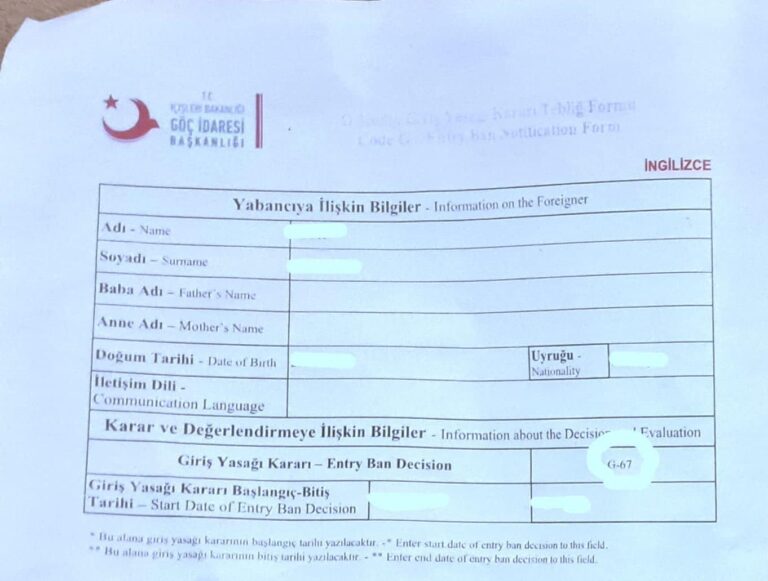
If you have an entry ban to Turkey, you can learn the reason and then appeal the ban decision for revoking the entry ban decision.
Family Residence Permit in Turkey – 2026 Comprehensive Guide
Get your Turkey Family Residence Permit: eligibility, fees, documents, duration, and step-by-step guide to live with your spouse and children.
Entry Ban (Restriction) Codes in Turkey and How to Appeal Them?
When you have an entry ban you will get a restriction code which describes the reason of the ban. Which ban code is given for which case?
How to Get Turkish Citizenship by Buying Property in 2026
Getting Turkish citizenship in Turkey by buying a property for $400.000 is possible, but you need to be careful with the conditions.
Importing a Tax-Free Vehicle to Turkey in 2026: Conditions, Eligibility and Fees
A quick guide to the legal conditions for temporarily importing vehicles into Turkey from abroad. How can you bring your car to Turkey?
Turkey Digital Nomad Visa and Short-Term Residence Guide (2026)
Up-to-date and legal information about Turkey Digital Nomad Visa application requirements, income criteria, and short-term residence process.
How to Obtain a Criminal Record Certificate for Foreigners in Turkey?
Can foreigners get criminal record certificate from Turkey? All up-to-date information on criminal record via e-Devlet or in-person application.